

Normal wear and tear vs damage rental property deductions in Washington come down to one legal distinction most landlords have never actually read in the statute.
RCW 59.18.280 excludes only “wear resulting from ordinary use” from what a landlord can deduct. It does not exclude every mark a tenant leaves behind.
Knowing exactly where that line falls, and documenting it before a dispute starts, is what separates a deduction that holds up from one a tenant successfully reverses.
What Counts as Normal Wear and Tear vs. Damage Under Washington Law
The phrase “normal wear and tear” is not actually in RCW 59.18.280. The statute’s real language is narrower: a landlord cannot withhold a deposit for “wear resulting from ordinary use of the premises.” Washington Law Help and RHAWA both describe this as deterioration from a tenant simply living in the unit. Harm from negligence, carelessness, accident, or abuse is not included.
RHAWA’s own example is a clean one: routine carpet wear from foot traffic is ordinary use, but heavy soiling from months of skipped vacuuming is not. That’s a Washington security deposit deduction law distinction. It isn’t a judgment call landlords get to make up on their own.
Why This Distinction Is Worth Getting Right
The stakes here are higher than the dollar amount of any one deduction. Under RCW 59.18.280, a landlord has 30 days after the tenant vacates to send a full, specific, written statement of any deductions.
Miss the 30-day window and the landlord forfeits the right to keep any of the deposit — full stop, regardless of how legitimate the damage was.
RHAWA notes that if a court finds the withholding was made in bad faith, it may award the tenant double damages — the full deposit back, plus an additional amount equal to it. That is not a technicality worth learning about after the fact.
When the Line Gets Drawn: The Move-In Checklist Is the Whole Case
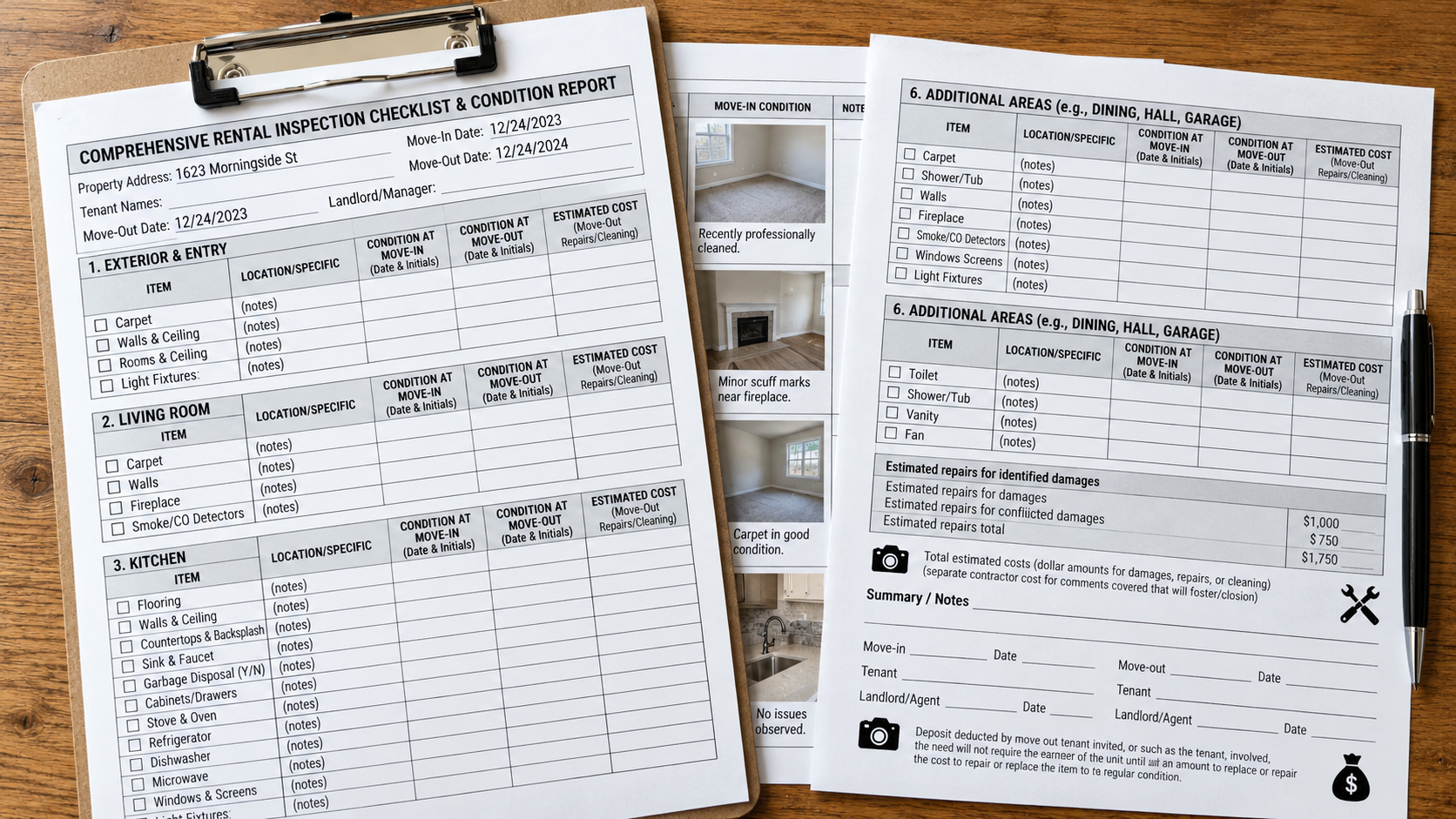
A damage claim is only as strong as what it is being compared against. RCW 59.18.260 requires a written move-in checklist documenting the condition of the unit, its fixtures, and its appliances before a landlord can collect a deposit at all. It has to be signed and dated by both landlord and tenant, and the tenant keeps a copy, with the right to request one free replacement copy if it’s lost.
Skip this step and the consequence is not a warning. The statute makes the landlord liable for the full deposit. A tenant who has to fight for it back may also recover court costs and attorney’s fees. A move-in checklist rental property program isn’t paperwork for its own sake. It’s the only baseline that makes a move-out damage claim provable at all.
How to Build a Landlord Damage Claim Evidence File
Security deposit deduction documentation that actually holds up tends to have the same three pieces.
- 1.Dated photos or video from move-in and move-out, compared side by side rather than described from memory.
- 2.An itemized repair invoice rather than a verbal estimate — the itemization is what lets a tenant see exactly what they are being charged for and why.
- 3.A professional’s written opinion on cause, for anything ambiguous.
Consider a common scenario: a glass stovetop shows up cracked at move-out. Ordinary cooking doesn’t crack tempered glass on its own, but a warped or oversized pan applying uneven pressure across one point can. A repair technician’s written note identifying that mechanism is what turns “probably the tenant” into landlord damage claim evidence a tenant can’t easily wave away. That is how to prove tenant caused damage without it turning into a dispute over whose word carries more weight.
Owners who’d rather not assemble this file themselves for every move-out can have Next Brick handle the documentation as part of standard management.

Wear and Tear vs. Damage: Examples Side by Side
| What it is | Normal wear | Damage |
|---|---|---|
| Carpet | A worn path from years of foot traffic | Soiled beyond cleaning from neglect, or burned |
| Walls | A few small nail holes from hung photos | Large holes, gouges, or holes patched with the wrong material |
| Blinds | Faded from sun exposure | Broken slats from being yanked or slammed |
| Baseboards | Minor scuff marks | Deep gouges or chunks missing from the wood |
| Appliances | A failure from ordinary age | Broken by a mechanism a technician can point to — misuse, overloading, forcing |
Thorough Documentation vs. Minimal Documentation: What Each Approach Risks
A landlord who skips photos and checklists moves faster in the moment. But that landlord has almost nothing to point to if a tenant disputes a deduction, and under RCW 59.18.280, the burden of proof sits with the landlord, not the tenant.
A landlord who documents everything spends more time at move-in and move-out, and occasionally pays for a professional opinion on a borderline case. What that buys in return is a claim that survives a challenge instead of collapsing into a full refund plus double damages. For a single unit, the lighter approach might feel proportionate. Across a portfolio, it’s a bet that compounds every time a tenant moves out.
A Deduction That Holds Up vs. One That Gets Reversed
Picture two versions of the same $400 carpet-replacement deduction.
| Claim A | Claim B | |
|---|---|---|
| Move-in record | Signed move-in checklist noting clean carpet | None |
| Move-out record | Photos showing pet stains and a burn mark | None |
| Cost evidence | Itemized invoice from a flooring company | A line on the final statement: “carpet damage, $400” |
| If disputed | A documented, specific claim tied to identifiable damage | An assertion with nothing behind it |
Under Washington’s 30-day, full-and-specific-statement standard, an assertion alone is exactly the kind of deduction that gets reversed.
The Short Version
Washington law excludes “wear resulting from ordinary use,” not everything a tenant leaves behind.
The line between the two is drawn by documentation, not opinion: a signed move-in checklist, dated photos at both ends of the tenancy, itemized invoices, and a professional’s opinion when the cause isn’t obvious.
Miss the 30-day statement deadline and none of that documentation matters — the deposit is forfeited regardless.
Getting normal wear and tear vs damage rental property calls right, and proving them, is what keeps a deduction defensible in the first place.
How Next Brick Helps Seattle-Area Owners Get This Right
Move-in checklists, move-out photo comparisons, and itemized statements are exactly the kind of detail that’s easy to skip when an owner is self-managing and short on time. It’s also exactly the detail that determines whether a deduction survives a dispute.
Next Brick handles this as a standard part of managing Seattle-area rental property — including for owners who’ve already had a deduction challenged and want a second look at how it was documented.
Not sure your own documentation would survive a challenge? Owners can get a free rental analysis, including a look at whether their current move-in and move-out records would hold up.
For related reading, see how a documented move-in process fits into the bigger picture in How to Rent Out Your House in Seattle: The 2026 Checklist for New Landlords, and how deferred maintenance decisions connect to the wear side of this equation in The Real Cost of Deferred Maintenance for Seattle-Area Rental Owners.
Frequently Asked Questions
Is a cracked stovetop considered normal wear and tear?
Not automatically. Ordinary cooking use doesn’t typically crack tempered glass, so a cracked stovetop is often damaged rather than worn — but proving that usually takes a technician’s opinion on what caused it, not just the crack itself.
Can a landlord charge a tenant for scratched floors?
Light surface scratches from ordinary foot traffic are generally wear and tear. Deep gouges, or scratches clearly caused by dragging furniture or pet damage, can be charged as damage if documented.
What does Washington law actually exclude from security deposit deductions?
RCW 59.18.280 excludes “wear resulting from ordinary use of the premises.” It does not use the phrase “normal wear and tear,” though that’s the term most people search for.
How long does a landlord have to return a security deposit in Washington?
30 days after the tenant vacates and the rental agreement ends. The landlord must send a full and specific written statement of any deductions within that window.
What happens if a landlord misses the 30-day deadline?
The landlord forfeits the right to keep any part of the deposit, regardless of whether the damage was real. A court may also award double damages if the withholding is found to have been in bad faith.
Do I need a move-in checklist to make a damage deduction?
Yes, functionally. RCW 59.18.260 requires a signed, dated move-in checklist before a deposit can even be collected, and without one there’s no documented baseline to compare move-out conditions against.
Can a tenant dispute a security deposit deduction?
Yes. Because the burden of proof sits with the landlord under Washington law, an undocumented or vague deduction is one of the easiest things for a tenant to successfully challenge.
What’s the difference between a repair estimate and real damage claim evidence?
An estimate says what a repair might cost. Landlord damage claim evidence is more specific: an itemized invoice for completed work, dated photos, and where needed, a professional’s written opinion on what caused the damage.
Is normal wear and tear the same thing as “ordinary use” under RCW 59.18.280?
Close, but the statute’s actual term is “wear resulting from ordinary use of the premises” — deterioration from simply living in the unit, as distinct from negligence, carelessness, accident, or abuse.
Can a landlord charge for cleaning at move-out?
Routine cleaning between tenancies is generally the landlord’s cost as ordinary turnover. Excessive soiling beyond normal cleaning, like carpets ruined from months without vacuuming, can be charged as damage.
